
In January 2026, Forrester published its latest Wave™ evaluation of Marketing Measurement and Optimisation Services, comparing the 12 most significant providers in the market. We at Objective Platform used this as a foundation for our comparison but, since the Forrester Wave limits its evaluation to larger providers, it leaves out many strong SaaS-first platforms, including us.
So we thought: if Forrester won't include us, we'll do it ourselves.
According to IAB’s 2026 State of Data report, 60–75% of marketers say current measurement systems fail to deliver the rigor, consistency and transparency needed to justify marketing spend. This gap is exactly why choosing the right measurement partner matters - and why we built this guide to help enterprise buyers navigate the landscape with confidence.
Meanwhile, privacy regulations and cookie deprecation have rendered traditional digital attribution increasingly unreliable. For enterprise buyers evaluating measurement solutions, the stakes extend beyond immediate analytics needs: marketing measurement is a long-term commitment, and organisations need confidence that their chosen vendor will still exist, evolve with the market, and support them for years to come.
What follows is Objective Platform’s own assessment of the marketing measurement landscape, organised by a category framework we outline below, and with Objective Platform positioned alongside the providers Forrester evaluated.
We've focused on solutions most relevant to enterprise organisations evaluating long-term measurement partnerships:
Marketing mix modelling (MMM) software enables brands to measure the incremental impact of marketing investments across all channels, both online and offline. Unlike digital attribution that tracks individual user journeys, MMM uses statistical analysis of aggregated data to understand how marketing activities drive business outcomes like revenue, conversions, and brand awareness.
Modern MMM solutions have evolved far beyond the quarterly consulting reports of the past. Today's offerings provide automated data integration, real-time scenario planning, and machine learning-powered optimisation, making sophisticated marketing measurement more accessible to teams, though capabilities and ease-of-use vary significantly by vendor.
Before diving into specific providers, it helps to understand the three broad categories of MMM solutions available today:
SaaS Platforms are software-first solutions built for scalable, repeatable deployment. They typically offer self-service interfaces, automated data ingestion, and regular model updates. The emphasis is on technology and speed-to-insight, with lighter consulting layers. Objective Platform falls into this category - distinguished by its white-box transparency, measurement triangulation framework, and European enterprise focus -, alongside providers like OptiMine and C5i.
Understanding which category a provider falls into matters enormously for enterprise buyers. A SaaS platform and a consultancy-first firm may both claim to "do MMM," but the economic model, speed of delivery, and level of ongoing support are fundamentally different.
Here's a checklist to help you find the right MMM solution:
Now, let’s start with the list.
We were founded in 2014 in Amsterdam, originally as Objective Partners, a consultancy firm. We built our SaaS platform because our consultants kept answering the same strategic questions manually – and realised technology could put those answers directly in marketers’ hands.
Today, our platform provides a sophisticated SaaS solution for Marketing Mix Modelling (MMM) that helps brands quantify the impact of their advertising efforts on business growth. By utilising a Hierarchical Bayesian methodology, it integrates diverse data sources, including online media, offline channels, and external factors like weather or pricing, to deliver privacy-friendly, cookieless insights.
With over a decade in the marketing measurement space, we stand out for our transparent "white-box" approach, enabling marketers to understand exactly how insights are generated rather than relying on opaque algorithmic outputs. We are more than pure SaaS though with a team of 10+ data scientists helping clients to make the most of the insights the platform brings.
Our key capabilities include:
We've earned the trust of major European enterprises including Vodafone, Deutsche Telekom Group, Vattenfall Energy, Unilever, FrieslandCampina and Just Eat Takeaway, with several maintaining partnerships for nearly a decade. Here's what sets us apart:
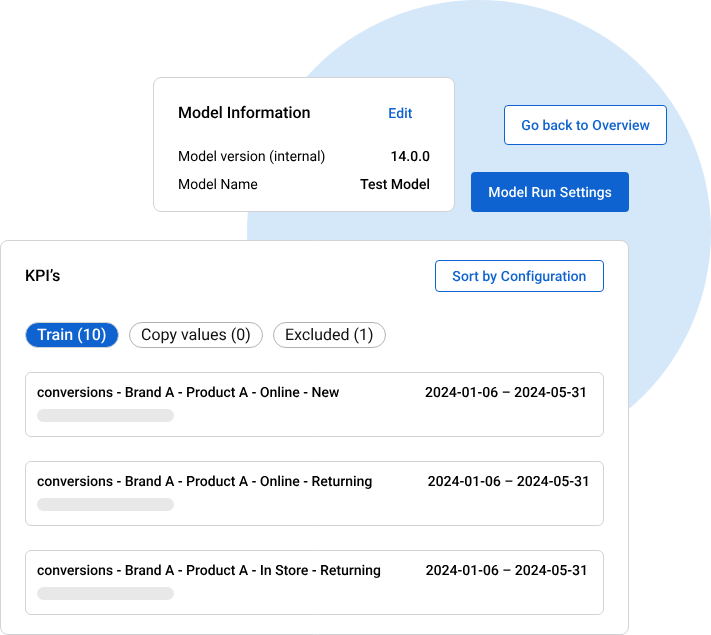
Unlike many MMM solutions that operate as "black boxes," our white-box interface allows users to see and adjust all model configuration settings without needing to delve into complex code.
This transparency addresses a critical pain point for enterprise marketers who need to confidently present insights to CFOs and stakeholders: you can explain exactly what drives each recommendation rather than asking leadership to trust unexplained outputs. Users can customise models by selecting time frames (daily or weekly), choosing KPI types (brand, performance, or traffic optimisation), and fine-tuning settings for each media channel and business dynamic.
Most MMM solutions focus exclusively on short-term media attribution: what did last week’s spend deliver? But enterprise marketers know that brand-building drives long-term baseline performance and that without measuring it, they’re flying blind on their most strategic investments. For a practical guide to managing that balance, see Brand and Performance Marketing: How to Balance Both Without Sacrificing Either.
Our Brand Insights dashboards quantify this relationship in three ways: the total effect of media across short-term and long-term horizons, the effect of brand equity on baseline sales and media cost efficiency, and the effect of media on brand metrics by channel, product, and campaign type. This enables marketers to demonstrate that a decline in brand investment leads to reduced baseline sales and increased cost per acquisition, providing the evidence needed to protect brand budgets in CFO conversations.
Notably, the Forrester Wave™ Q1 2026 identified gaps in brand value and long-term measurement among some evaluated providers. Brand Intel addresses this gap directly, making Objective Platform one of the few SaaS solutions that operationalises both performance and brand measurement in a single platform.
We champion a triangulation approach to marketing measurement, recognising that no single method is perfect. This integrated approach is uncommon among the providers in this comparison. Most offer MMM as a standalone methodology, with experimentation and attribution treated as separate workstreams or not offered at all.
The framework combines three complementary measurement methods, each with its own strengths and blind spots:
The power of this approach lies in cross-verification.
Rather than treating any single methodology as a definitive "source of truth," triangulation deliberately compares results across methods to determine what to trust and how much. When MMM, experiments, and attribution point in the same direction, confidence is high. When they diverge, it signals where deeper investigation is needed.
Our platform connects to over 200 data sources through automated data ingestion, harmonising fragmented data into a consistent structure. Beyond media data, we incorporate non-media factors: pricing changes, weather conditions, seasonal trends, promotional activities, competitor spending, and one-off events such as product launches or website outages.

Unlike the quarterly or annual delivery cadences typical of hybrid providers such as Analytic Partners and Ekimetrics, Objective Platform provides regular, ongoing insights that allow real-time budget adjustments throughout the year. Insights are available continuously in the platform — not packaged in static reports that arrive weeks after decisions need to be made.
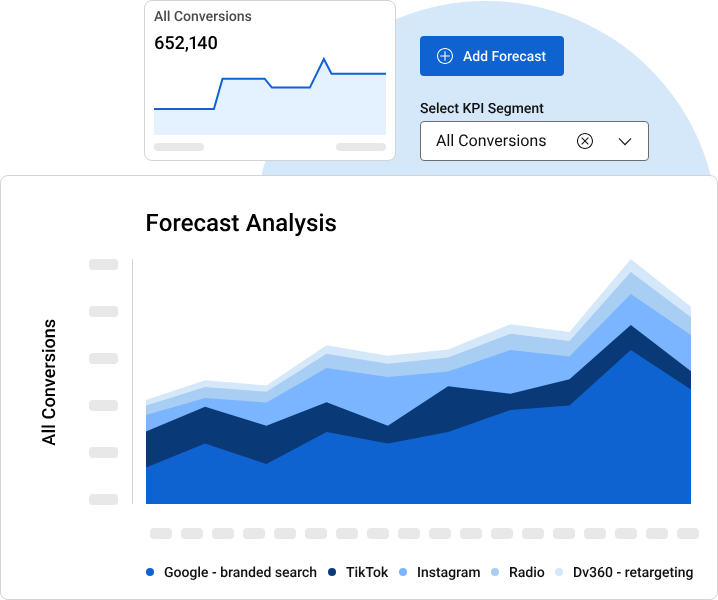
Our Media Scenario Planner serves as a centralised hub for strategic media planning, where marketers can create multiple “what-if” scenarios for different teams, budgets, and channel combinations. It uses Bayesian statistics and machine learning to help marketers predict outcomes before committing budgets. A dedicated Forecast Dashboard enables side-by-side comparison of multiple scenarios — providing self-service scenario planning capabilities that rival what Forrester praised in Analytic Partners, but available continuously rather than tied to consulting engagement cycles.
Objective Platform supports the entire campaign planning lifecycle in a single SaaS platform: from brand insights and media strategy through briefing, planning, buying, optimisation, and reporting. This end-to-end coverage means marketers can evaluate historical performance, plan future campaigns, optimise in-flight, and report results without switching between tools or waiting for consultants to deliver separate workstreams.
We are entirely independent from media buying, eliminating the conflict of interest that exists when agencies or media sellers provide measurement services. While agency-group providers like Gain Theory maintain that their contracts are separate from media operations, full structural independence — as Objective Platform offers — eliminates this question entirely.
When your measurement partner has also sold you the media being measured, objectivity becomes questionable. This independence ensures that insights and recommendations serve the brand's interests rather than validating pre-purchased media.
Measure what matters with Objective Platform.
Analytic Partners is a global analytics firm that combines a proprietary SaaS platform with high-touch consulting services to help Fortune 500 brands understand and optimise commercial drivers across marketing, sales, operations, and finance.
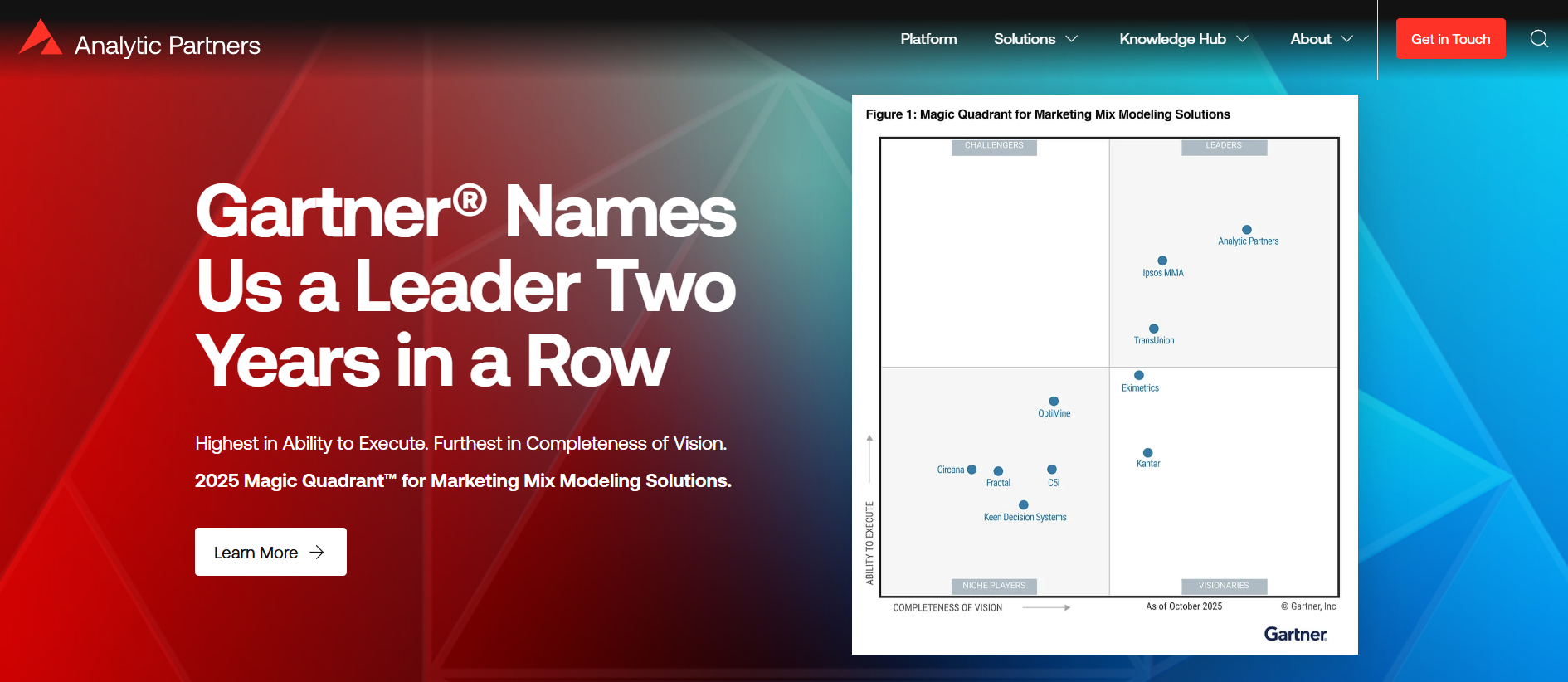
Founded in 2000 and backed by Onex Partners V, the company has evolved from traditional MMM into what they call "Commercial Intelligence." In the Forrester Wave™ Q1 2026, Analytic Partners was named a Leader, earning top marks for engagement management, data quality consulting, and scenario planning. Its key capabilities include:
The Forrester Wave™ Q1 2026 highlighted Analytic Partners' systematic approach to engagement management, featuring extensive stakeholder interviews and prescriptive engagement playbooks, as well as its superior scenario planning and benchmarking capabilities. Customers praised its strategic thought partnership and global footprint.
Their differentiation stems from several factors:
While most MMM solutions focus on marketing effectiveness, Analytic Partners has developed "Commercial Analytics," extending measurement to encompass all business drivers. Their methodology integrates data from marketing, sales, operations, and external sources to provide a comprehensive view of what drives business outcomes.
The ROI Genome is a proprietary intelligence framework drawing on over two decades of marketing and commercial data across more than 750 brands, 45 countries, and many industries. This intelligence layer informs analytical models, providing context that goes beyond any single company's data — though its proprietary nature means clients must trust the benchmarks without independent verification of the underlying methodology.
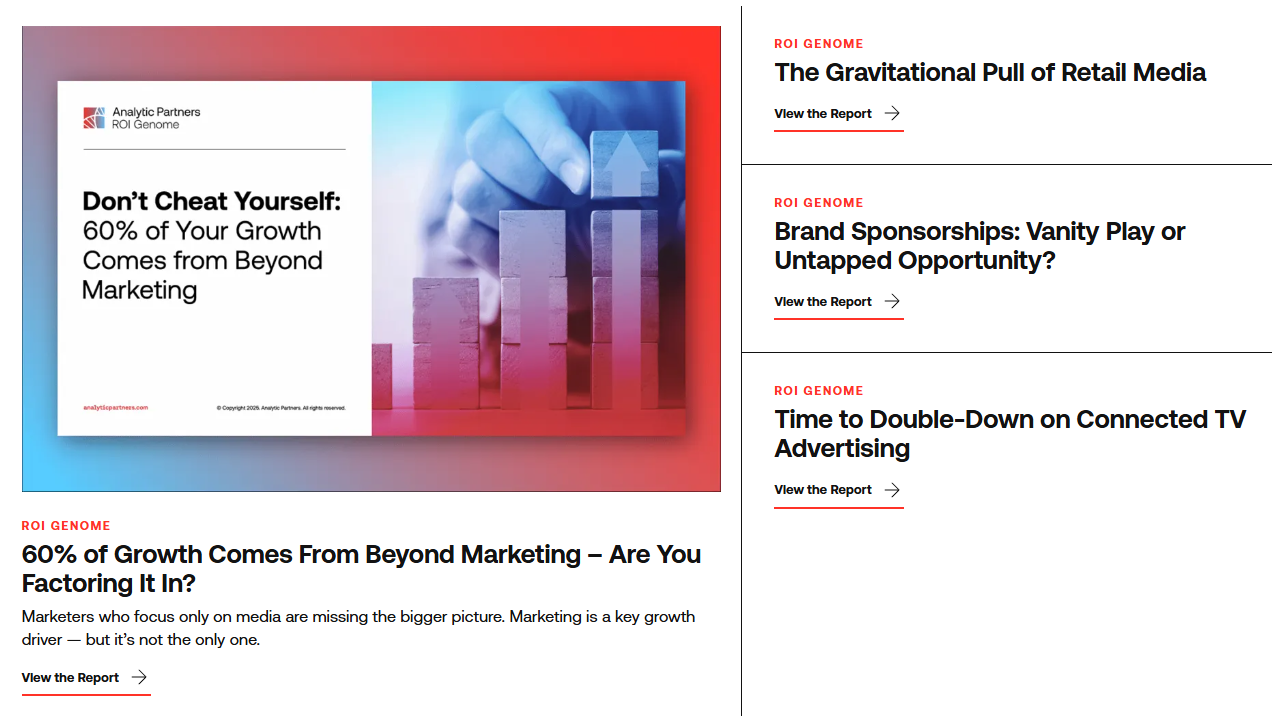
Their Customer Engagement Team comprises over 600 onshore consultants globally, acting as "change agents" who embed within client organisations. This includes stakeholder interviews, prescriptive engagement playbooks, and ongoing strategic partnership. However, this consultancy-heavy approach means longer engagement cycles. Organisations comfortable with quarterly or annual planning cycles may find this acceptable, while teams needing agile, always-on optimisation will find this cadence insufficient for modern campaign management where decisions need to be made weekly or even daily.
Make smarter, enterprise-wide decisions with Analytic Partners.
Gain Theory is a marketing effectiveness consultancy within the WPP agency group, though contracts are separate and most of its revenue comes from non-WPP clients. The Forrester Wave™ Q1 2026 named Gain Theory a Leader, highlighting its vision for deeper and broader marketing measurement and its flexible, modular offerings.

Its key capabilities include:
Forrester praised Gain Theory's vision for deeper and broader measurement, as well as its flexible, modular offerings. Customers valued its transparency, engagement, modelling accuracy, and local modelling teams.
The HiFusion platform's interoperability provides flexibility for simultaneous measurement of multiple KPIs via various methodologies, including strong integrations with client-provided models. This modularity means organisations can start with core MMM and expand into creative measurement, brand valuation, and scenario planning as needs evolve.
As part of WPP, Gain Theory can tap into the group’s data partnerships for benchmarking, scenario planning, audience measurement, and brand valuation. Gain Theory’s position within WPP provides ecosystem advantages but also raises a question enterprise buyers should consider: can measurement be fully objective when the provider sits within an agency holding group? Gain Theory maintains that its contracts and revenue are largely separate from WPP’s media operations, but for organisations where independence is non-negotiable, structurally independent providers eliminate this consideration entirely.
Gain Theory's innovation roadmap includes in-campaign tracking and adaptable scenario planning that incorporates competitor behaviour and cultural shifts, providing a more dynamic approach to measurement than static quarterly reporting.
Maximise impact with Gain Theory.
Ekimetrics is an independent marketing analytics and measurement consultancy headquartered in Paris, with projects delivered in over 50 countries. The Forrester Wave™ Q1 2026 named Ekimetrics a Leader, noting its excellent modelling, consulting capabilities, and unique focus on sustainability measurement.
Its key capabilities include:
Forrester praised Ekimetrics for its flexible measurement capabilities that accommodate client operating models, and for its culture of continuity in client teams. Customers highlighted its modelling transparency and ability to drive enterprise growth.
Ekimetrics' deliberate land-and-expand approach starts with marketing measurement and extends into other aspects of client business. Its vision centres on embedding measurement throughout an organisation, making it a fit for brands that aspire to connect marketing effectiveness with broader business resilience and sustainability goals.
One.Vision's modular architecture means clients can select the capabilities most relevant to their needs. However, the platform is often implemented in a bespoke fashion, which can result in longer timelines than more standardised SaaS alternatives such as Objective Platform, where deployment follows a repeatable, proven implementation process. The trade-off is a highly customised solution that fits the client's specific data environment and operating model.
Forrester also noted that customers find the platform can be complicated to use. For organisations where ease-of-use and accessibility are priorities, this complexity is worth evaluating — particularly when compared with SaaS platforms that offer guided workflows and ML assistants to simplify the modelling process.
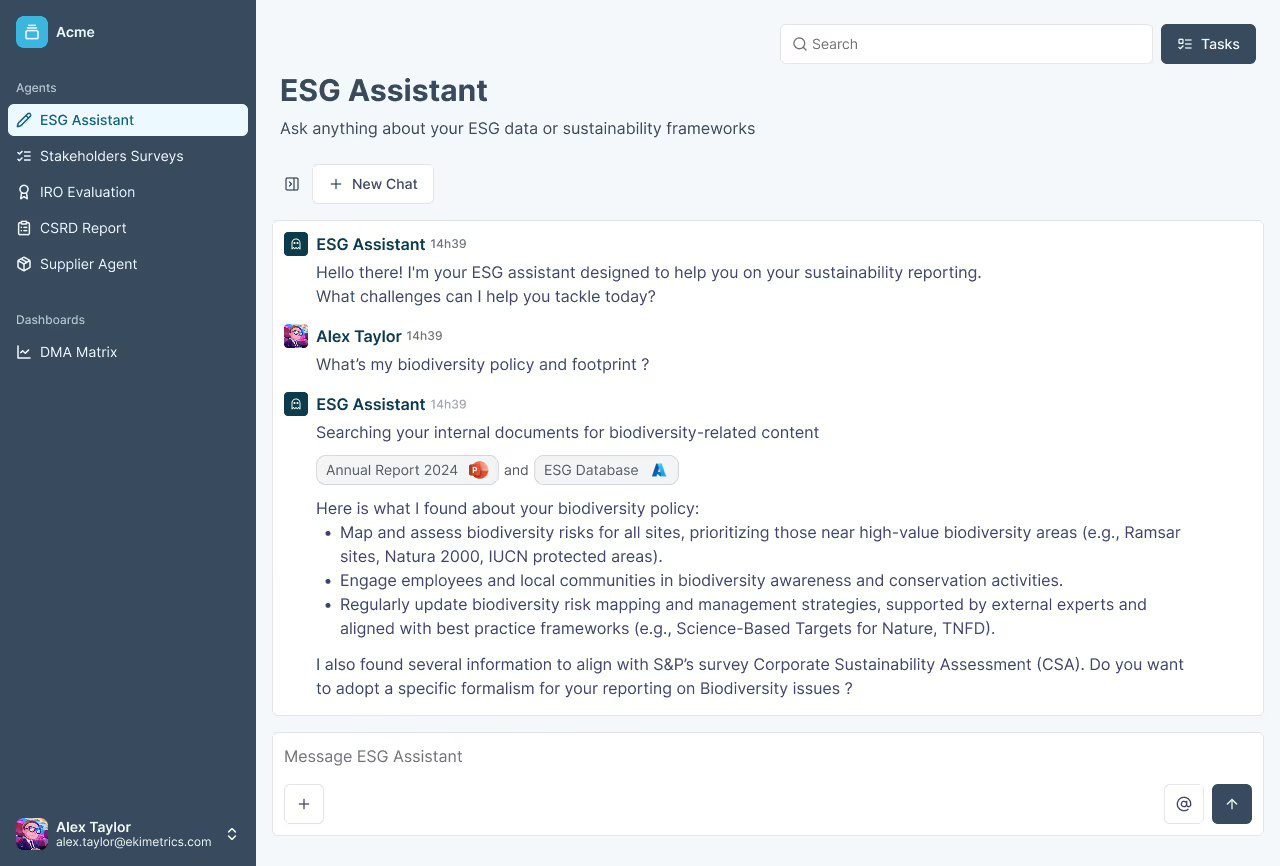
A distinctive differentiator, Ekimetrics offers carbon footprint optimisation modules, enabling brands to factor environmental impact into their media planning and optimisation decisions.
Transform data into enterprise-wide insights with Ekimetrics.
OptiMine is an agile, cloud-based marketing analytics provider based in Minneapolis. In 2025, it was acquired by Uptempo, a marketing operations management provider, which will supply resources and client connections to fund future innovation. The Forrester Wave™ Q1 2026 named OptiMine a Strong Performer, highlighting its speed-to-insight and data ingestion capabilities.

Its key capabilities include:
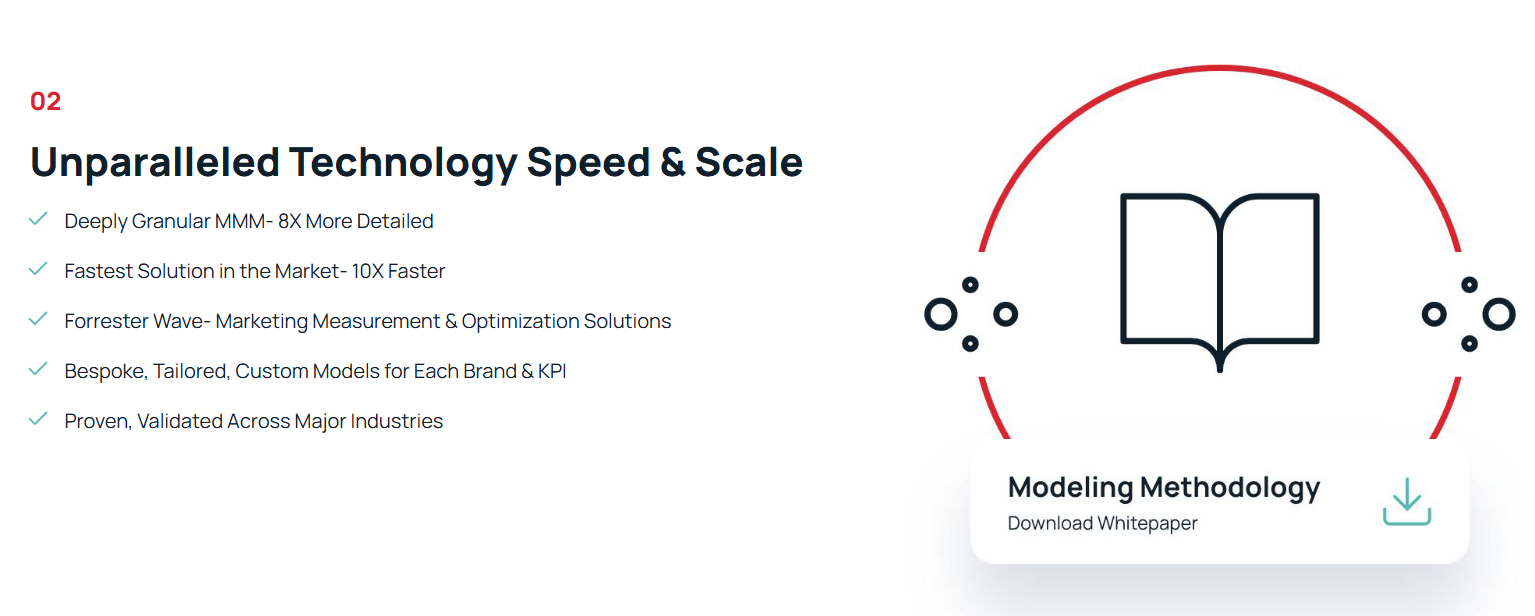
Forrester noted that OptiMine's calling card is speed to insights, driven by strengths in data ingestion and management. Customers appreciated its seamless data ingestion and its ability to explain methodologies to data scientists and non-marketers.
OptiMine's data ingestion is faster because it can process highly granular client data without forcing taxonomisation upfront. For organisations where time-to-insight is the primary bottleneck, this speed advantage is significant. Models can be deployed in a fraction of the time required by traditional MMM providers.
Beyond the technology, OptiMine's engagement management and business strategy consulting are driven by a centre-of-excellence model that unites consultants with leaders across the client enterprise. OptiMine measures down to individual ads and campaigns, a capability also offered by SaaS peers like Objective Platform, though OptiMine’s speed of initial deployment remains distinctive. However, the platform and consulting services are highly focused on media measurement, with less attention given to other business drivers like pricing or supply chain effects.
The Forrester Wave noted gaps in brand value and long-term measurement compared to Leaders. Organisations prioritising long-term brand measurement alongside performance optimisation may find these gaps significant — particularly those seeking to quantify how brand equity drives baseline sales and how media investments build brand value over time.
The 2025 acquisition by Uptempo positions OptiMine within a broader marketing operations management platform, potentially creating a more comprehensive solution for marketing planning, budget management, and performance measurement. However, the recency of the acquisition means the combined offering is still evolving. For enterprise buyers prioritising provider stability and continuity, the integration period following an acquisition is worth monitoring.
Get fast, granular, and privacy-safe media insights with OptiMine.
C5i is an AI and marketing analytics firm based in Mumbai, India. The July 2024 acquisition of Analytic Edge increased C5i's market presence and capabilities significantly. The Forrester Wave™ Q1 2026 named C5i a Strong Performer, noting its strong AI vision and data processing capabilities.

Its key capabilities include:
Forrester highlighted C5i's vision for a closed-loop, AI-powered "marketing intelligence operating system" and its strength in data ingestion and scenario planning. Customers praised its engagement management and demonstrated success in building models for multi-brand global retailers.
C5i's roadmap centres on becoming a closed-loop AI-powered marketing intelligence operating system, using a combination of human expertise and AI to deliver always-on marketing optimisation. The roadmap is ambitious, with many generative and agentic AI enhancements planned to speed time-to-insight and model rebuilds. Enterprise buyers should evaluate what is available and proven today versus what remains on the roadmap. Particularly when comparing against providers that already have AI assistants in production. Many generative and agentic AI enhancements are planned to speed time-to-insight and model rebuilds.
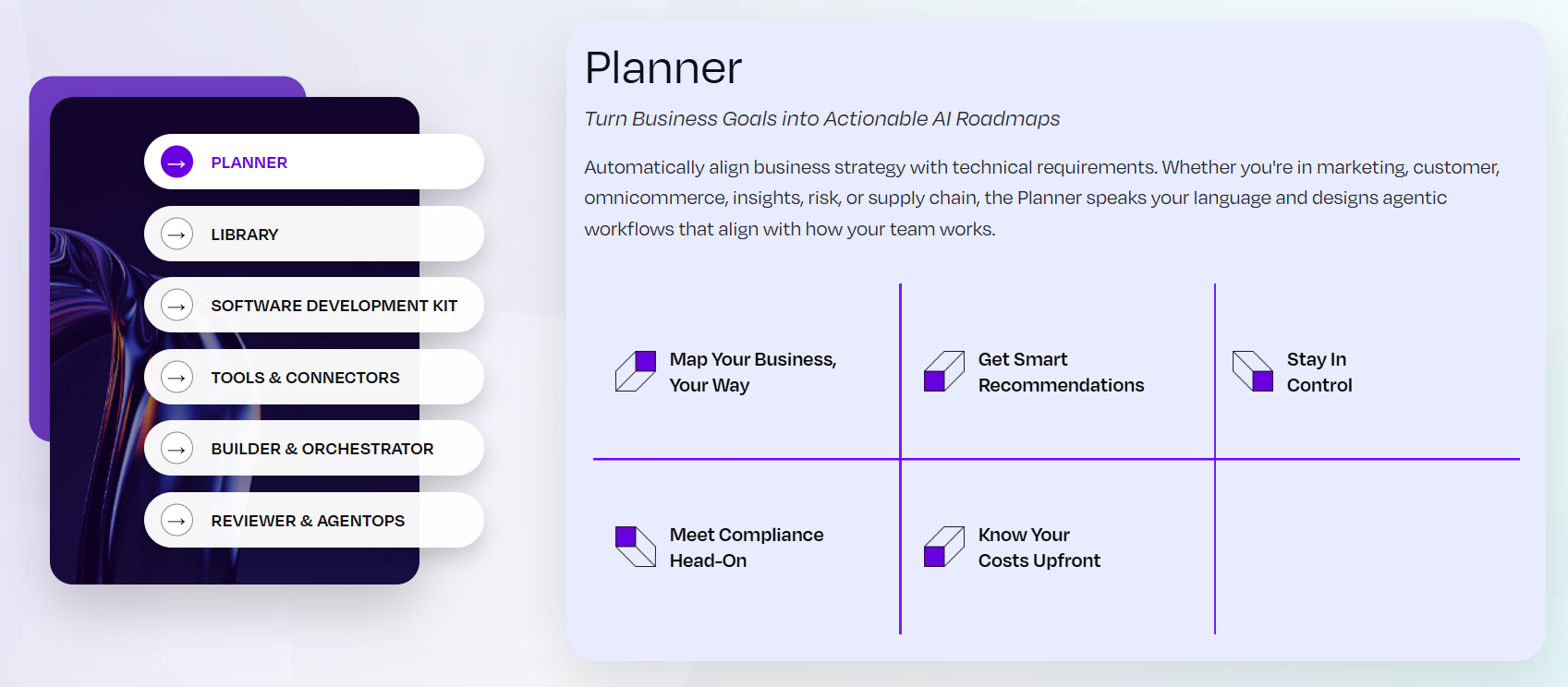
The Marketing Data Cloud consolidates data from CRM, sales, email marketing, advertising channels, demand-side platforms, and customer data platforms into a unified model. This data infrastructure strength enables C5i to incorporate factors like pricing and inventory levels into media strategy, going beyond pure media measurement.
Forrester noted that C5i’s activation tools and dashboards currently lag competitors. For organisations that prioritise intuitive, self-service insight delivery — where marketers need to independently explore data, compare campaigns, and generate reports for stakeholders — this gap is worth evaluating alongside C5i’s data infrastructure strengths.
C5i offers full-service, SaaS, and SaaS+FTE delivery models, providing flexibility for organisations at different stages of measurement maturity. The global delivery team is led by employees and supplemented with local-language consultants.
Power AI-driven, multi-brand measurement with C5i.
Google Meridian is an open-source Marketing Mix Modelling framework released for general availability in January 2025. It enables data science teams to build and customise MMM analyses without licensing fees.
Its key capabilities include:
Meridian's entire codebase is publicly available on GitHub. Data scientists can examine how the model calculates ROI, handles adstock decay, estimates saturation curves, and applies priors. For organisations requiring audit trails and full methodological transparency, this open-source approach provides significant value.
Rather than single-point estimates, the Bayesian approach generates probability distributions for every metric. Users can input existing knowledge about channel performance (from incrementality experiments or industry benchmarks) as priors, improving accuracy when data signals are weak.
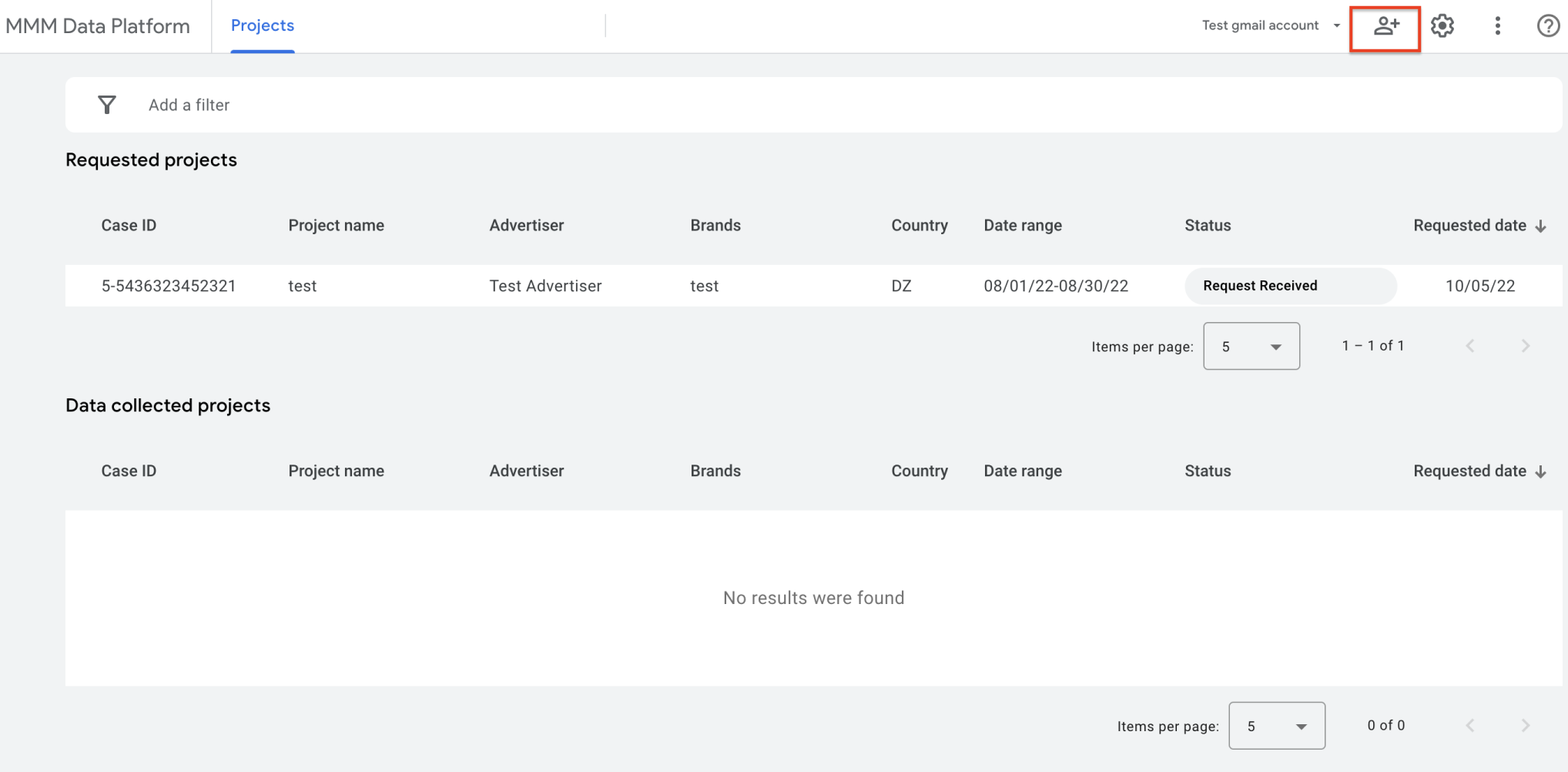
The MMM Data Platform enables streamlined access to Google Ads, YouTube reach and frequency data, and Google Query Volume (a measure of search interest useful as a control variable). This integration can simplify data preparation for organisations with significant Google media spend.
While there is no licensing fee, organisations should account for the cost of data science personnel comfortable with Python and Bayesian statistics, computing infrastructure (GPU resources recommended), data preparation time, and certified partner services if implementation assistance is needed.
For organisations drawn to Meridian’s Bayesian transparency and open methodology but needing an enterprise-ready interface, automated data ingestion from 200+ sources and dedicated support, Objective Platform offers a comparable Hierarchical Bayesian foundation with full SaaS deployment, effectively providing Meridian-level methodological rigour without the build-and-maintain burden.
Take full control of marketing analytics with Google Meridian.
Marketing mix modelling has evolved from an annual consulting exercise into an always-on operational capability. The right approach depends on your organisation's scale, technical resources, and measurement priorities, as well as your confidence in the vendor's long-term stability and commitment to your market.
Rather than recommending individual providers in isolation, we think the most useful framework is to consider which category of solution fits your organisation's needs and culture:
If you need a scalable SaaS platform with continuous, self-service insights: Look at SaaS-first providers like Objective Platform, OptiMine, and C5i.
These offer the fastest deployment, most frequent model updates and a technology-led approach. Within this category, Objective Platform is purpose-built for European enterprise organisations seeking transparency and independence and a measurement triangulation framework that goes beyond standalone MMM — with dedicated Brand Insights capabilities that bridge the gap between brand-building and performance measurement. OptiMine leads on speed-to-insight, and C5i brings the strongest AI and data infrastructure vision.
The economic model is fundamentally different from consulting-led providers: predictable SaaS fees rather than billable hours and custom project scopes.
If you want deep consulting support alongside technology: Hybrid providers like Analytic Partners, Gain Theory, and Ekimetrics combine real platforms with substantial consulting teams.
These are ideal for global organisations that value strategic partnership, change management, and embedding measurement across the enterprise. The trade-off is longer engagement cycles, higher cost structures, and a dependency on individual consulting relationships.
All three were named Leaders in the Forrester Wave™ Q1 2026.
If your priority is in-house control with zero licensing cost: Open-source frameworks like Google Meridian and Meta's Robyn provide complete methodological transparency for teams with the data science capability to build and maintain their own solutions.
The hidden cost is talent, infrastructure, and the ongoing burden of maintenance.
If you need bespoke, services-led measurement: Agency and consultancy-first providers like Acxiom, Kantar, Circana, and Merkle deliver measurement primarily as a service. Their strengths lie in proprietary data assets and industry-specific expertise (particularly in CPG and retail for Circana, and attribution for Acxiom), but they lack the scalability and speed of SaaS platforms.
The measurement landscape continues to evolve as privacy regulations reshape digital advertising and AI capabilities transform how insights are generated and acted upon.
Whichever category fits your organisation, investing in robust marketing measurement will position you to optimise marketing investments as the data landscape changes.
To see how Objective Platform compares for your specific measurement needs, request a personalised demo.
What is the difference between a SaaS MMM platform and a consultancy-led MMM solution?
A SaaS MMM platform provides continuous, self-service access to marketing measurement through a software interface, with automated data ingestion and regular model updates. A consultancy-led solution delivers measurement primarily as a bespoke service, with dedicated analysts producing periodic reports. The economic model differs significantly: SaaS platforms operate on predictable licensing fees, while consultancy-led solutions typically involve billable hours and custom project scopes. The right choice depends on whether your organisation needs always-on operational measurement or periodic strategic analysis.
What is open-source MMM and what does it cost to run?
Open-source MMM frameworks like Google Meridian and Meta's Robyn are freely available codebases that data science teams can use to build their own marketing mix models. There is no licensing fee, but organisations should account for the cost of data science personnel comfortable with Python or R, computing infrastructure, data preparation time and ongoing model maintenance. For teams without dedicated data science resources, a SaaS platform typically offers a lower total cost of ownership.
How often should a marketing mix model be updated?
Traditional MMM delivered insights annually or quarterly, which meant decisions were often based on data that was already months out of date. Modern SaaS platforms update models continuously as new data arrives, enabling in-flight campaign optimisation rather than purely retrospective analysis. For enterprise organisations managing budgets across multiple channels and markets, continuous model updates are increasingly the standard expectation.
What is methodological transparency in MMM and why does it matter?
Methodological transparency refers to the ability to inspect how a model generates its recommendations, including which variables are included, how they are weighted and what assumptions underpin the outputs. It matters because marketers need to explain and defend budget recommendations to CFOs and stakeholders. A model that produces outputs without explanation requires leadership to trust the tool rather than understand the reasoning, which makes it harder to act on recommendations with confidence.
What should enterprise buyers look for in an MMM provider's stability and longevity?
Enterprise marketing measurement is a long-term commitment. Organisations should evaluate how long the provider has been operating, whether they have a track record of multi-year client relationships, and whether recent events such as acquisitions or ownership changes introduce uncertainty about future product direction and support continuity. Providers with a decade or more of enterprise client relationships offer stronger evidence of stability than newer entrants, regardless of how compelling their technology roadmap appears.