.png)
Retail media advertising spend in Europe is set to reach €31bn by 2028, according to IAB Europe's Chief Economist Dr Daniel Knapp, speaking at the 2024 DMEXCO conference in Cologne. Retail media advertising in Europe is expected to increase by 22% in 2024, compared to total ad market growth of just 6%.
Traditionally, in-store promotions and prime shelf space — both offline and online — were often part of broader agreements between brands and retailers, included as value-added benefits. Retail media vendors like supermarkets, department stores and online marketplaces have started monetising these spaces, transforming them into paid opportunities. This shift challenges brands that once relied on free exposure, forcing them to reassess their strategies. It also provides an opportunity to take control of how and where your brand stands out relative to competitors, allowing for more strategic and targeted placements.
Retail media vendors typically provide their own insights, claiming their solutions deliver significant uplift. This uplift is often contested and does not account for other marketing activities that may have contributed to increased sales or brand awareness.
This presents a challenge for marketing managers: how do you determine the true value of retail media investments? If your brand already uses Marketing Mix Modelling, incorporating retail media as a channel can provide the clearest view of incremental uplift. This puts you in a stronger position to negotiate retail media placements and confidently decline pricing that will not deliver a positive incremental return on investment.
At Objective Platform, we configure retail media as a channel alongside other media and non-media factors within our MMM approach. This reveals the actual incremental value of retail media, helping marketers understand the real impact of their retail media investments and providing better negotiating power with vendors. The Media Scenario Planner takes this further, allowing marketing managers to simulate different media investment scenarios and identify when and how much to invest in retail media for optimal returns.
While retail media vendors provide their own campaign reporting, these insights often lack the depth needed to isolate the true impact from other influencing factors. Marketers need a more comprehensive approach to evaluate whether retail media investments are driving real incremental growth rather than simply capturing demand that would have occurred regardless. Integrating retail media into an MMM framework allows brands to measure its effectiveness objectively in relation to other channels and business drivers.
Retail media vendors typically provide their own reporting on campaign effectiveness, but these reports rarely account for other marketing activity that may have contributed to the uplift. Integrating retail media as a channel within a Marketing Mix Model gives a more objective view of its incremental contribution relative to other media. For even greater precision, structured store-level experiments — comparing sales in stores where retail media was active against stores where it was not — can isolate the true incremental impact. Combining both approaches gives brands the evidence they need to negotiate retail media placements from a position of knowledge rather than assumption.
Retail media can be integrated into a broader MMM framework to provide a holistic view of its impact compared to other marketing channels. While MMM traditionally focuses on measuring the effectiveness of different media investments at a macro level, retail media introduces a more granular perspective by capturing in-store promotions and shopper behaviour. By incorporating detailed store-level data into MMM, businesses gain a clearer understanding of how retail media complements other advertising efforts, enabling more precise budget allocation and strategic adjustments.
.png)
To measure the incremental impact of retail media, retail data is processed and incorporated as an additional media channel within the MMM. This approach enables brands to evaluate how retail media influences brand and performance KPIs while comparing its effectiveness and efficiency against other media channels.

While MMM provides a strong high-level view of the combined impact of all marketing actions, it does not inherently capture the detailed effects of individual retail media initiatives. This is because MMM is designed to assess overall media efficiency rather than pinpointing the exact contribution of every single promotion. Adding retail media as a channel within MMM still provides valuable insights, offering a structured way to measure its role in the broader marketing mix. For a more precise and granular measurement, additional testing and experimentation can complement the MMM results, refining our understanding of retail media's true incremental impact.
MMM also provides a key advantage by putting retail media into context: comparing its impact with other channels allows brands to make informed decisions about whether to shift more budget towards retail media or invest further in TV or other channels for greater overall impact.
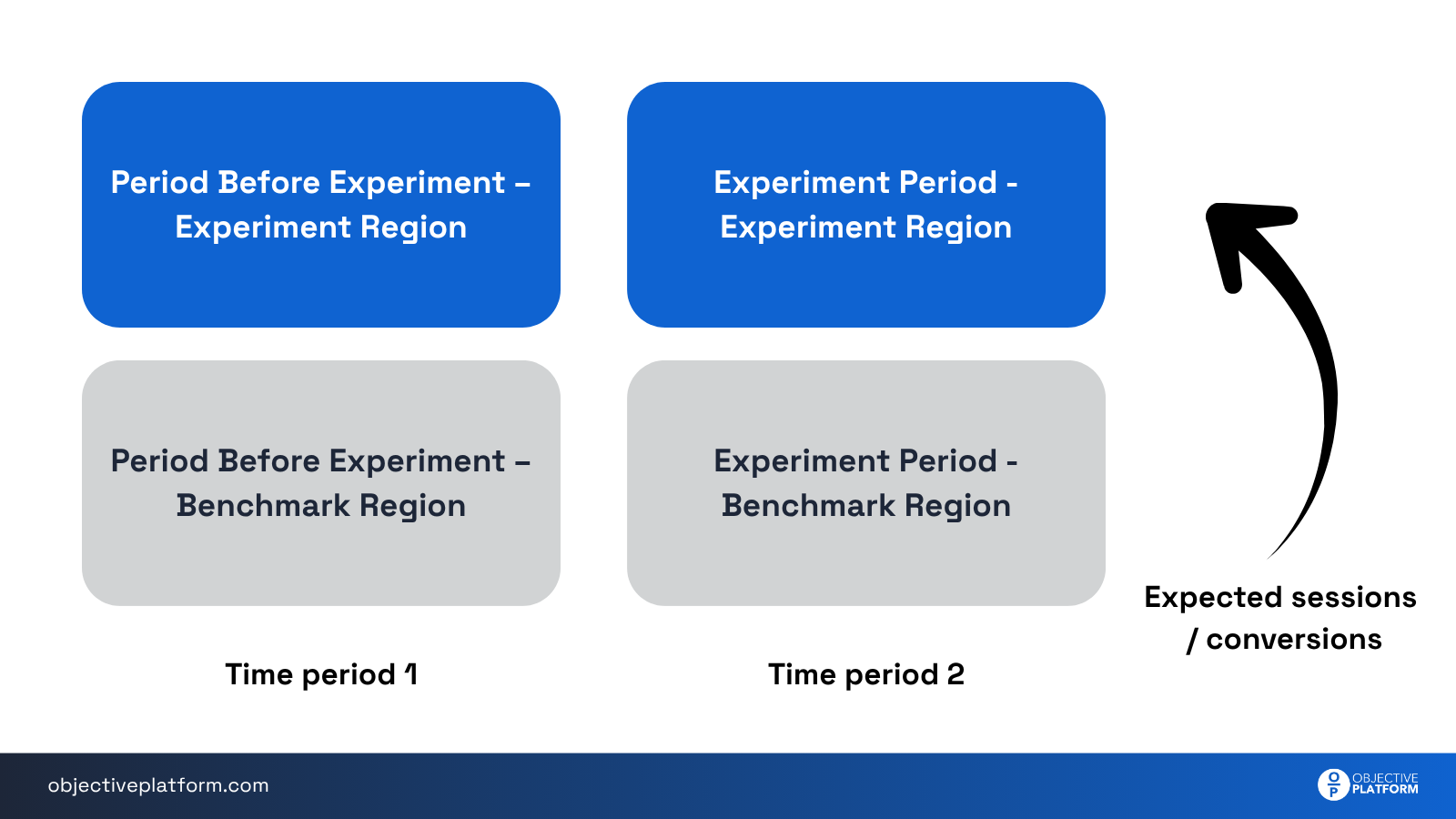
Measuring the true incremental impact of retail media requires more than basic vendor reports or high-level MMM. The key advantage of retail media data is its inherent experimental nature: retail media actions are applied to specific products in certain stores over a defined period, while other stores serve as natural control groups where these actions are not implemented. By comparing sales in both sets of stores, we can effectively isolate the impact of retail media — similar to a controlled experiment but without the need for artificial test setups. This makes retail media data a powerful tool for accurate incrementality measurement.
To implement these experiments effectively, comprehensive data is essential. This includes:
The key to successful experimentation lies in the ability to compare data from stores with and without retail media actions over a similar time period. This allows you to calculate an expected value for performance in the absence of retail media and then compare it with the actual performance during the experiment.
To accurately measure the incremental impact of retail media, brands should follow a structured experimental approach. This methodology ensures that results are reliable, statistically significant and actionable for future investment decisions.
To get the most reliable results, you need to define both your experiment period and your comparison period. The experiment period refers to the time frame when retail media actions are implemented, while the comparison period should mirror this time frame for stores that did not receive these interventions. By selecting similar time frames and regions, you can ensure external factors such as seasonality and macroeconomic influences are controlled for, allowing for more accurate conclusions.
Once the data is gathered, the next step is to calculate the expected sales value for the stores without retail media exposure. This can be done by considering historical sales performance and adjusting for seasonal factors and trends. By comparing actual sales during the experiment period with expected sales, you can determine the incremental impact of retail media.
Incremental Retail Media Impact = Actual Sales - Expected Sales
High-level MMM helps you make better holistic decisions by comparing retail media investments with other media channels and campaigns. However, MMM — even when store-level data is available — is not the most precise way to measure the incremental value of individual retail media actions. This is why we combine incremental retail media calculations with holistic MMM: measuring incremental impact with maximum accuracy while enabling holistic decision-making through the model.
Integrating experimental findings with MMM allows brands to refine their understanding of retail media's true contribution. While MMM offers a high-level view of media efficiency across channels, experiments provide more granular insights that can validate or adjust MMM results. This combination of approaches enables brands to make more informed decisions about where and how much to invest in retail media, ensuring optimal returns.
For a practical introduction to how experiments integrate with MMM, see How to Use Experiments in Marketing Measurement. For a worked example of geo-lift testing applied to a specific channel, see Validating Marketing Assumptions with Geo-Lift: Branded Search in Focus.
As retail media spending grows and vendors become more sophisticated in how they package and price their inventory, the brands that negotiate most effectively will be those with independent measurement. Vendor-provided uplift reports are a starting point, not a conclusion. The combination of MMM and structured store-level experiments gives marketing teams an objective, defensible view of what retail media is actually contributing to business outcomes.
This matters not just for evaluating past investments but for planning future ones. With a clear picture of retail media's incremental contribution relative to other channels, you can decide with confidence whether to increase investment, hold steady or reallocate budget towards channels with stronger returns.
Want to understand how the latest retail media trends are shaping marketing budgets? Download the Marketing Channel Trends 2026 report.
What is retail media and why is it growing so quickly?
Retail media refers to advertising inventory sold by retailers — both online and in-store — that allows brands to reach shoppers at or near the point of purchase. It is growing because retailers have recognised the commercial value of their first-party data and physical or digital shelf space, and brands are willing to pay for proximity to the purchase decision. IAB Europe projects retail media advertising spend in Europe will reach €31bn by 2028.
Why can you not rely on retail media vendors for incrementality measurement?
Retail media vendors have a commercial interest in reporting strong performance for their own inventory. Their measurement typically attributes all sales uplift to the retail media activity without accounting for other marketing channels, seasonal effects or baseline sales trends that would have occurred regardless of the campaign. Independent measurement through MMM and structured experiments removes this conflict of interest.
What is the difference between MMM and store-level experiments for retail media measurement?
MMM provides a high-level view of retail media's contribution relative to all other channels and business factors, making it useful for strategic budget decisions. Store-level experiments compare sales in stores where retail media was active against matched control stores where it was not, providing more granular and causally reliable incrementality estimates for individual campaigns. The two approaches are complementary: experiments improve the accuracy of MMM by providing causal evidence that can be used as calibration inputs.
How do you set up a control group for retail media experiments?
A control group for retail media experiments consists of stores that are comparable to the test stores in terms of size, location, historical sales performance and customer profile, but where retail media activity is not implemented during the test period. The more similar the control group is to the test group before the experiment, the more reliably you can attribute any difference in performance during the experiment to the retail media activity itself.
How do you use retail media incrementality results to improve future planning?
Incrementality results from store-level experiments can be fed directly into your MMM as calibration inputs, improving the accuracy of the model's retail media estimates. They can also be used to set minimum return thresholds for future retail media investments, enabling you to negotiate with vendors based on independently verified performance data rather than vendor-provided benchmarks.